Engineering & products
Amazon's 3,000 Tata E-Trucks Show Why Indian Fleets Must Go Electric
Amazon's 3,000 Tata e-trucks prove commercial EVs survive real Indian duty cycles. Here's how Gujarat fleets build the TCO, retrofit and charging plan.
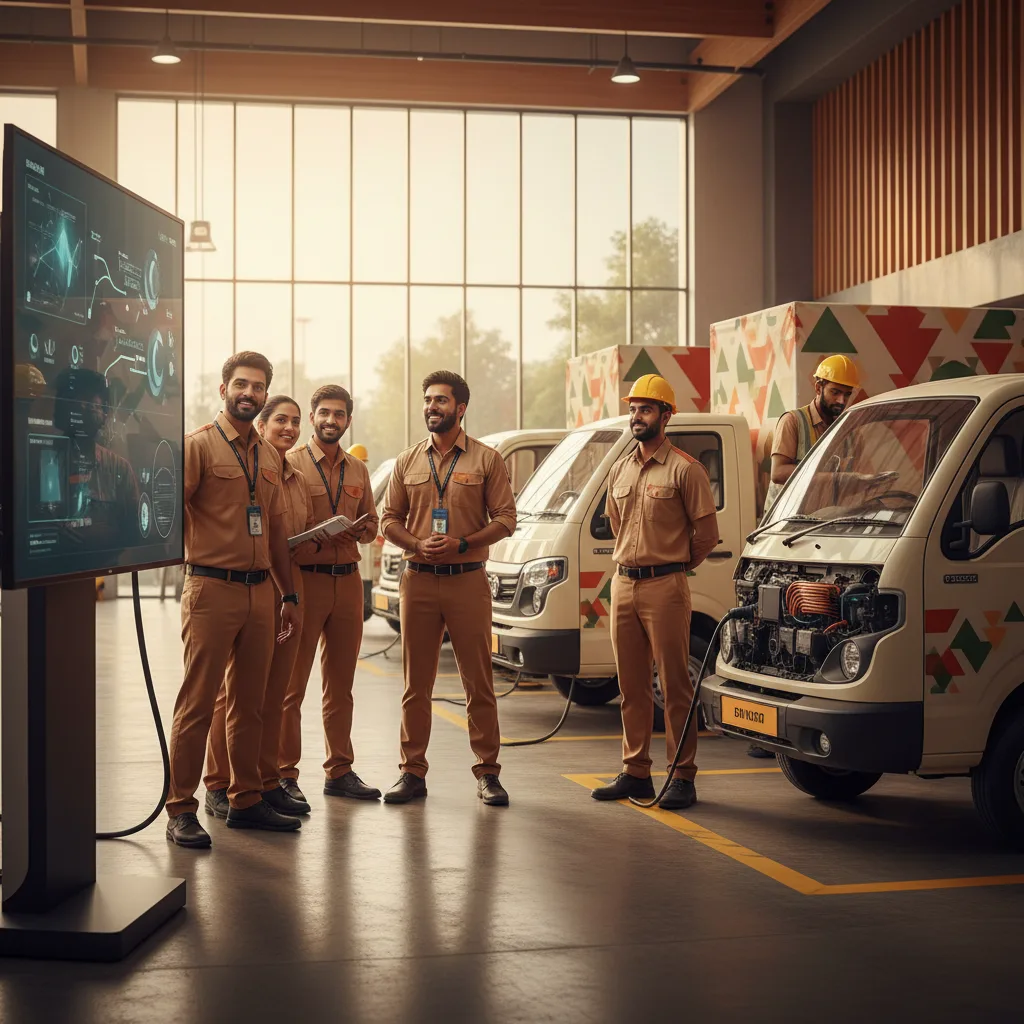
Amazon's order of 3,000 Tata electric trucks is the loudest signal yet that Indian logistics is going electric — and it tells you more than a hundred policy papers ever could. When the country's largest e-commerce operator bets its middle-mile on electric trucks in India, mid-size fleets cannot afford to treat electrification as a side experiment. Fleet electrification in India has crossed from pilot theatre to procurement reality, and the operators who read the signal first will own the cost advantage.
What Amazon's 3,000 Tata E-Trucks Signal for Indian Logistics
The scale is the point. Three thousand Tata e-trucks on Indian roads is one of the country's largest commercial EV deployments, and these Amazon Tata e-trucks will do real delivery duty — loading bays, full payloads, monsoon roads, tight dispatch windows. When thousands of electric trucks survive that grind instead of a demo track, the technology debate is settled.
Electrification never stays at the top of the chain, either. When e-commerce and FMCG giants electrify, their vendors, 3PLs and contractor fleets inherit the mandate within a few procurement cycles. If you move freight for a large shipper today, expect green logistics to appear in your next rate negotiation — as a qualification criterion, not a bonus.
Why Gujarat is the natural first mover
The corridors around Ahmedabad, Sanand, Mundra and Dahej run high-utilization, fixed-route freight across pharma, chemicals, textiles and auto components. That is precisely the duty-cycle profile where electric commercial vehicles in India win first: predictable distance, predictable load, back to base every night. Gujarat operators are not early adopters here — they are the obvious first movers.
For mid-size fleet owners, the question has already shifted from if to which routes first. That reframing is worth more than any spec sheet.
The Economics of Electric Trucks: TCO Beats Diesel on the Right Routes
EV total cost of ownership is arithmetic, not ideology — and on the right routes it beats diesel. The mistake most operators make is modelling TCO on brochure figures instead of their own dispatch data. Build the model on your actual routes, payloads and tariffs, and the answer often surprises.
Energy cost per km
Electricity is cheaper per kilometre than diesel for most commercial duty cycles, and dramatically more price-stable. Diesel swings with global crude and state-level taxes; a utility tariff is a known input you can negotiate and hedge with captive generation. Route-level TCO modelling turns that stability into a planning advantage.
Maintenance savings
An electric powertrain has a fraction of the moving parts of a diesel one — no clutch, no gearbox taking abuse in city traffic, no oil and filter cycles. Regenerative braking extends brake life on top of that. For high-utilization fleets, fewer service events mean less downtime, and downtime is the cost that quietly destroys fleet margins.
Where EVs win first
- Fixed routes with a known daily distance
- Last-mile and intra-city distribution with predictable stops
- Plant-to-warehouse and plant-to-port shuttles
- Industrial corridor runs with consistent payloads
The payback logic is simple: the denser and more predictable the route, the faster the payback. High-utilization fleets see returns first; irregular long-haul assets should stay diesel for now.
Buy New or Convert: OEM E-Trucks vs. EV Retrofit for Existing Fleets
Once you know which routes to electrify, the next decision is how. Two paths dominate: buy new OEM e-trucks, or run a commercial EV conversion on vehicles you already own.
OEM electric trucks in India come with warranties, financing and proven platforms, which makes them the default for fleet expansion. EV retrofit in India is the second path: strip out the diesel powertrain and replace it with a motor, an EV battery system, a controller and telematics. It is a lower-capex way to electrify a chassis and body you have already paid for.
| Factor | New OEM e-truck | Certified EV retrofit |
|---|---|---|
| Upfront capex | Higher | Lower — chassis, cabin and body are reused |
| Best fit | Fleet expansion and new routes | Young chassis on predictable routes |
| Warranty and financing | OEM-backed | Depends on the retrofit program |
| Lead time | Order-to-delivery queue | Often faster per vehicle |
| Compliance | Factory homologated | Must meet Indian homologation requirements |
Fit criteria decide the winner: vehicle age, duty cycle, route predictability and load profile. A well-maintained five-year-old truck on a fixed plant-to-warehouse shuttle is a retrofit candidate; a tired twelve-year-old tractor on irregular long-haul is not.
Compliance is non-negotiable. Use certified retrofit programs that meet Indian homologation requirements — never a grey-market EV conversion in India, where an uncertified job leaves you with an uninsurable, untransferable asset and a battery nobody will warranty.
Charging Infrastructure: The Real Bottleneck in Fleet Electrification
Ask any operator who has piloted electric commercial vehicles: the truck is rarely the hard part. The real bottleneck in fleet electrification in India is EV fleet charging infrastructure — and it is where most plans quietly die while the disciplined ones pull ahead.
Depot charging beats public charging for fixed-route fleets
Overnight charging at your Ahmedabad or Gujarat facility removes range anxiety and queue time in a single move. You start every morning at full charge with zero dependence on what exists outside your gate. Public fast charging becomes a fallback for exception days, not the plan.
Captive solar plus smart charging
Gujarat has some of the best solar economics in the country, and a depot roof is an underused asset. Captive solar paired with smart charging can push energy cost per km even lower and insulate you from tariff hikes. Fleet decarbonization and cost reduction stop being competing goals.
Size batteries to duty cycles, not to fear
Over-specing batteries wastes capex — a larger EV battery system costs more upfront, weighs more and eats into payload. Route-and-charge planning gets sizing right: match capacity to the duty cycle, not to the worst-case scenario your imagination produces.
Then protect the asset. IoT-based battery and charger monitoring extends battery life, prevents downtime and gives you a live fleet health dashboard. Feeding that telemetry into an AI operations layer such as Corp8 AI turns raw data into decisions — which vehicle to charge first, which route to reassign, which battery is drifting before it strands a truck on the Narol–Sanand run. Modern EV fleet management is a software problem as much as a hardware one.
A 90-Day Playbook to Electrify Your Fleet in Gujarat
- Days 1–30 — route-level fleet audit. Log duty cycles, loads and the diesel baseline, then build a TCO model per route. Rank routes by density and predictability, not sentiment.
- Days 31–60 — pilot 2–5 vehicles. New e-trucks or certified retrofits, running your densest fixed route with overnight depot charging.
- Days 61–90 — measure and plan. Track energy cost per km, uptime and battery health on a dashboard, then turn the results into a board-ready scale-up plan with payback timelines per route.
Run three workstreams in parallel: driver training, high-voltage safety protocols and state EV incentive applications. Gujarat's EV policy incentives and central schemes such as PM E-Drive, which supports electric trucks, can materially improve pilot economics — but only if you apply early and correctly.
Why Waiting Is the Riskier Bet: A Founder's Take
Customer pressure is real. Large shippers and export customers increasingly demand green logistics proof, not promises — emission data, EV share, route-level reporting. Fleet decarbonization is becoming a vendor qualification in RFPs, and it will reach mid-size Gujarat operators faster than most expect.
Diesel is also becoming a riskier asset class. Tightening city emission norms are shrinking where diesel trucks can operate, and resale values soften as buyers price in obsolescence. Wait-and-watch is not a neutral strategy — it is an expensive one.
First movers in Gujarat get three compounding advantages: cheaper pilot learnings while vendors and charging sites are still available, better depot locations, and a brand story customers actually remember.
Electric mobility in India is no longer a policy story — it is a procurement story. Treat electrification as a 24-month transformation: start with one route, measure honestly, then scale with a partner who builds both the vehicle technology and the software around it.
That is how we approach it at Techynix: EV conversion and retrofit programs built to Indian homologation requirements, IoT-backed charging and battery monitoring, and the fleet software that ties it all together — designed for operators in Ahmedabad and across Gujarat.
Work with Techynix — book a call to scope your AI, software, IoT, EV or brand project, and leave with a route-by-route electrification plan you can defend in front of your board.
Frequently Asked Questions
How many electric trucks is Amazon adding in India?
Amazon has announced 3,000 Tata electric trucks for its Indian delivery network — one of the largest commercial EV deployments in the country. The significance goes beyond the number: it proves e-trucks can handle real delivery duty cycles, and it pushes Amazon's vendors, 3PLs and contractor fleets to electrify as well.
Is fleet electrification cost-effective for Indian businesses?
Yes — on the right routes. Electric trucks beat diesel on total cost of ownership where routes are fixed and utilization is high, thanks to lower energy cost per km, cheaper maintenance and less downtime. Dense, predictable operations such as plant-to-warehouse shuttles and intra-city distribution see the fastest payback; irregular long-haul is still better served by diesel for now.
Can existing diesel trucks be converted to electric in India?
Yes. A certified EV retrofit replaces the diesel powertrain with an electric motor, battery system, controller and telematics, letting you electrify vehicles you already own at lower capex. The fit depends on chassis age, duty cycle and route predictability — and the conversion must be done by a certified program meeting Indian homologation requirements, never a grey-market workshop.
How do I start electrifying my fleet in Gujarat?
Start with a route-level audit: duty cycles, loads and your diesel baseline, converted into a TCO model per route. Then pilot 2–5 vehicles — new e-trucks or certified retrofits — on your densest fixed route with overnight depot charging, and track energy cost per km, uptime and battery health. In parallel, apply for Gujarat EV policy incentives and central schemes like PM E-Drive, and train drivers on high-voltage safety.
What is the biggest challenge in fleet electrification in India?
Charging infrastructure. The vehicles are largely solved; dependable, right-sized charging is not. Fixed-route fleets should lead with depot charging at their own facility, matched to duty cycles and monitored via IoT, rather than depending on public chargers. Upfront capex and battery sizing are real issues too, but charging is the bottleneck that decides your timeline.
Written by Niraj Ojha
Niraj Ojha is a multidisciplinary engineer, founder, and product builder working across electronics, automotive engineering, manufacturing, software, and AI.
More writing
Why Predictive Maintenance Never Learns: The Repair Notes Gap
Predictive maintenance stalls when repair insights never reach the model. Here's how to close the loop so every breakdown teaches your system.
Digital Twins for Indian Manufacturers: Smart Factory ROI Explained
A numbers-first guide to digital twins for Ahmedabad and Gujarat manufacturers — high-ROI use cases, payback math, a phased roadmap, and pitfalls to avoid.
Predictive Maintenance IoT: The $20.4B Play for Indian Manufacturers
How predictive maintenance IoT helps Ahmedabad and Gujarat manufacturers cut unplanned downtime, age-proof legacy machines, and build toward a smart factory.