Engineering & products
Zinc-Air Battery Breakthrough: What It Means for India's EV Fleets
India's Hindustan Zinc–IIT Madras zinc-air battery could reshape EV fleet economics — cheap domestic zinc, minute-scale refueling, less import exposure.
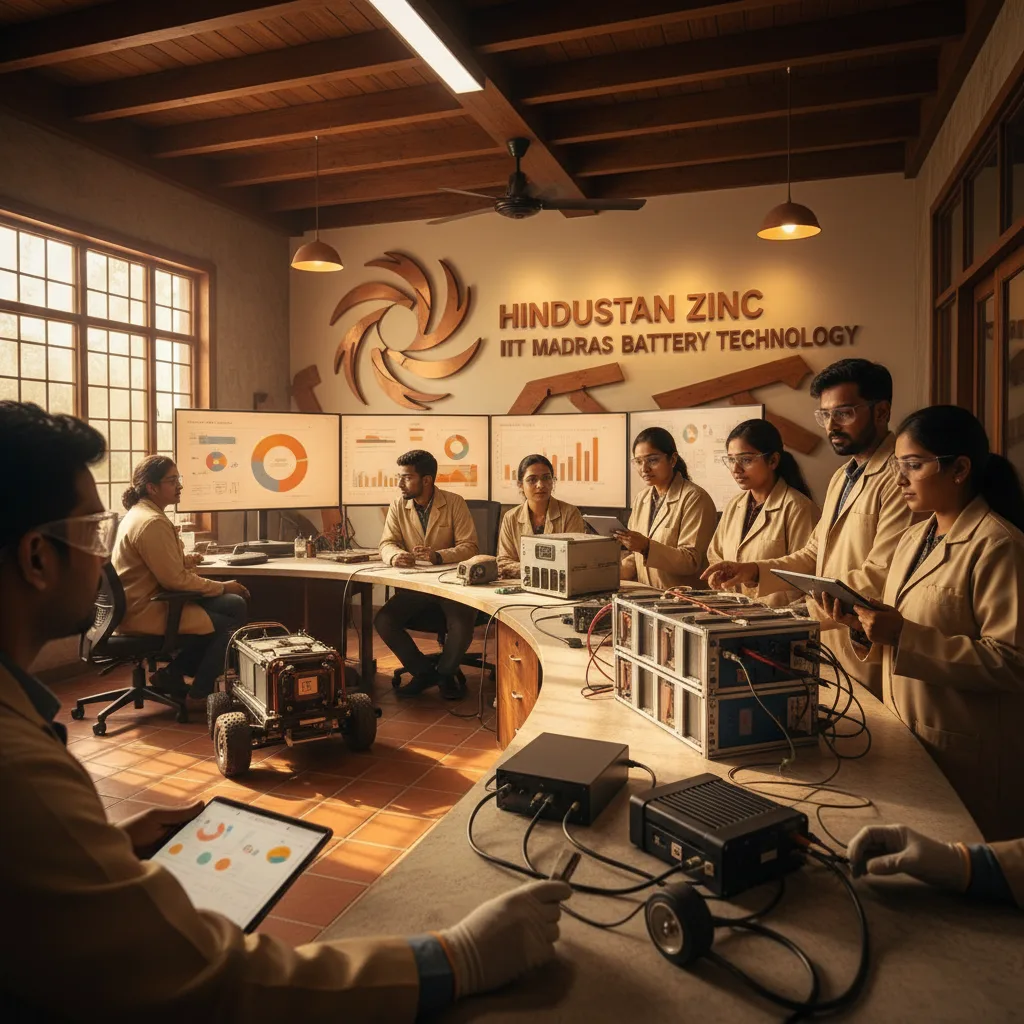
The most expensive component in an electric vehicle is not the motor or the power electronics — it is the battery, and in India that battery is built almost entirely from imported lithium, cobalt and nickel. That single dependency quietly sets vehicle prices, fleet economics and the pace of electrification. Which is why a working zinc-air battery for EVs, developed indigenously by Hindustan Zinc and IIT Madras, deserves the full attention of every founder and fleet operator evaluating EV battery technology in India.
If you run three-wheelers, delivery vans or industrial vehicles out of Ahmedabad or anywhere in Gujarat, here is what this breakthrough actually means — minus the hype.
What Is a Zinc-Air Battery and Why It Matters for EVs
A zinc-air battery generates electricity by oxidizing a zinc anode with oxygen drawn straight from the surrounding air, through a gas-diffusion cathode, inside a water-based electrolyte. As it discharges, the zinc converts into zinc oxide. Because one reactant — oxygen — never has to be carried inside the cell, the chemistry offers some of the highest theoretical energy densities of any battery design, built from one of the cheapest industrial metals on earth.
For commercial fleets, energy density and EV battery cost in India are the bottlenecks that decide everything. Density determines range and how much payload survives once the EV battery system is installed. Cost determines whether the vehicle economics ever close. Recharge time determines how many revenue hours a vehicle actually works each day.
India imports the overwhelming majority of its lithium-ion cells, tying fleet economics to materials whose prices swing hard and whose supply chains the country does not control. Alternative chemistries are not a science experiment here — they are a strategic priority.
And India starts from unusual strength. Hindustan Zinc, the industrial partner behind the IIT Madras program, is one of the world's largest integrated zinc producers, with mining and smelting operations in Rajasthan. A lithium-ion battery alternative built from a metal India already produces at scale changes the strategic math completely.
The Hindustan Zinc–IIT Madras Breakthrough, Explained
Hindustan Zinc partnered with IIT Madras to develop indigenous zinc-air battery technology aimed squarely at electric mobility — the most important zinc-air battery development in India so far. Crucially, this is not a paper collaboration: the team has built working cells and installed them in a real vehicle platform.
The proof point is an electric tricycle running on zinc-air cells. A live demonstration matters more than it sounds — it shows the cells deliver genuine traction power and survive real-world handling, not just tidy bench readings. It moves the technology from interesting chemistry to engineering that moves a vehicle.
A Made-in-India chemistry also does quiet structural work: it shortens the supply chain from mine to smelter to cell to pack, largely inside the country, and gives Indian manufacturers a credible position in a technology where no global winner is locked in yet.
Now the honest founder's read. Proven today: the chemistry works, the cells power a vehicle, and mechanical refueling is viable. Not proven: cycle life at commercial scale, manufacturing cost per kWh at volume, reverse logistics for spent zinc plates, and road certification. Treat this as a strong signal to prepare — not a procurement option.
A lab breakthrough is a signal to build capability, not a purchase order. The fleets that win will be the ones that built the operational muscle before the new battery arrived.
Zinc-Air vs Lithium-Ion: What Fleet Owners Should Know
Here is the side-by-side view fleet owners actually need — deliberately free of unverifiable numbers, because at this stage honest comparisons are directional, not decimal.
| Dimension | Zinc-Air | Lithium-Ion (NMC / LFP) |
|---|---|---|
| Core materials | Abundant zinc plus air; water-based electrolyte | Lithium with cobalt, nickel or iron phosphate — largely imported into India |
| Energy density | Among the highest theoretical densities of any battery chemistry | Mature benchmark, improving incrementally |
| Refuel / recharge | Mechanically swap zinc plates in minutes | DC fast charging typically 45–90 minutes |
| Thermal safety | Non-flammable aqueous electrolyte; no lithium-style thermal runaway | Organic electrolyte; fire risk, harder to manage in Indian heat |
| Maturity | Lab and pilot stage; first vehicle demos | Commercial at global scale with deep supplier ecosystems |
| Infrastructure | Refueling points plus reverse plate logistics | Charging depots, grid connections, distribution upgrades |
Three rows deserve emphasis. On materials: zinc is abundant and produced domestically, while lithium, cobalt and nickel are imported and have shown sharp boom-bust pricing. On safety: a non-flammable, water-based chemistry is a genuinely different risk profile for depots operating through 45-degree summers. On refueling: a swappable EV battery model turns recharging into a logistics operation — exchange the fuel, do not wait for it.
What Zinc-Air Could Mean for India's EV Fleets
For high-utilization fleets — three-wheelers, last-mile delivery, commercial vans, buses — the upside concentrates in four places.
- Total cost of ownership. Every hour a vehicle spends plugged in is revenue it never earns. Refueling in minutes converts downtime back into productive shifts, which is where TCO actually moves.
- A refuel-first operating model. Refuel, don't recharge removes charging windows from daily operations, letting one vehicle run the multi-shift duty cycles that current packs struggle to support.
- Lower charging capex. Depots avoid heavy grid upgrades and demand charges, and EV fleet charging infrastructure shifts from a megawatt problem to a plate-logistics problem. Local distribution networks — already stressed in industrial estates — take far less strain.
- Reduced import exposure. Domestic zinc means more predictable pricing and a supply chain India controls — a real hedge against lithium price volatility and battery cost shocks.
The Gujarat Angle: Ahmedabad as a Fleet Electrification Hub
Gujarat has spent a decade positioning itself as an early mover in electric mobility in India: supportive EV policy, a dense industrial base, and logistics infrastructure linking ports to factories. States like this adopt new battery chemistry first, because their fleets run hard enough for the economics to surface quickly.
Ahmedabad is a case in point. Its logistics networks, the pharma corridor, textile operations and the diamond trade routes across Gujarat are dominated by exactly the high-utilization, short-route, return-to-base duty cycles where swappable zinc-air packs would shine.
For the region's growing conversion industry, the implication is direct. Commercial EV conversion projects live and die on pack cost and downtime — a cheaper, quickly swappable pack could make retrofit economics work for vehicle classes that lithium-ion leaves marginal, accelerating EV conversion in India well beyond passenger cars.
What local operators should watch: OEM pilot programs, battery-swapping networks building plate-exchange capability, and state-backed deployment schemes. When those three converge, fleet electrification in India moves fast — and Gujarat moves first.
How Founders and Fleet Operators Should Prepare Now
- Run the TCO math before your next purchase or conversion cycle. Model cost per kilometre including downtime, not just upfront price, and add a zinc-air scenario line so the framework is ready when the product is.
- Build the data layer early. Mixed-chemistry fleets need IoT-based battery health and machine monitoring from day one; an operations platform such as Corp8 AI can consolidate telematics, battery telemetry and route data into dashboards that expose cost per km and degradation before they become stranded assets.
- Pilot small and measure hard. One route, one vehicle class, clear KPIs — uptime, cost per km, effective range. Small pilots generate the evidence that de-risks the bigger bet.
- Work with a technology partner or venture studio for the telematics, dashboards and reporting infrastructure new battery tech demands. That is software work, and it is faster with people who have built it before.
Roadblocks to Watch: The Honest Founder's View
- Commercialization timeline. Lab breakthrough to fleet-ready product is measured in years, not months — budget your strategy accordingly.
- Reverse logistics. Someone must collect discharged zinc plates and run the reprocessing loop at scale. That supply chain does not exist yet; it is a business in itself.
- Certification and homologation. A brand-new chemistry must clear India's automotive standards and testing regime before it legally powers a road vehicle — time, and test cycles.
- Parallel competition. Sodium-ion, solid-state and steadily improving lithium-ion are maturing alongside zinc-air. Delivered economics, not novelty, will pick the winners.
India's transport electrification will not be won by waiting for the perfect battery. It will be won by operators who build the data, telematics and operational muscle to adopt whichever chemistry crosses the economics line first — and by founders who see the zinc supply chain, swapping networks and retrofit opportunity for what they are: new businesses waiting to be built.
Techynix works with founders and fleet operators as a technology partner and venture studio — building the AI systems, custom software, industrial IoT, EV conversion engineering and brand foundations that fleet electrification demands. Work with Techynix — book a call to scope your AI, software, IoT, EV or brand project.
Frequently Asked Questions
What is a zinc-air battery and how does it work?
A zinc-air battery generates electricity by oxidizing a zinc anode with oxygen drawn from the air through a gas-diffusion cathode, inside a water-based electrolyte. As it discharges, zinc converts into zinc oxide. In the EV model being developed in India, discharged zinc plates are mechanically swapped out and reprocessed off-board rather than recharged inside the vehicle.
How is a zinc-air battery different from a lithium-ion battery?
The differences are material and structural. Zinc-air uses abundant zinc plus air in a non-flammable water-based electrolyte, while lithium-ion uses imported lithium with cobalt, nickel or iron phosphate in a flammable organic electrolyte. Zinc-air offers very high theoretical energy density and minute-scale mechanical refueling, but lithium-ion is commercially mature at global scale while zinc-air is still at pilot stage.
Will zinc-air batteries replace lithium-ion batteries in EVs?
A full replacement is unlikely. The realistic outcome is coexistence: zinc-air is best suited to high-utilization commercial fleets — three-wheelers, delivery vans, buses — where refueling speed, safety and material cost dominate, while lithium-ion and emerging sodium-ion continue to serve passenger vehicles and other segments.
When will zinc-air EV batteries be available in India?
There is no confirmed commercial launch date. Going from a working demonstration to a fleet-ready product means solving cycle life, manufacturing cost, reverse logistics for spent zinc plates and vehicle certification — a journey measured in years. Watch OEM pilots, swapping-network announcements and state-backed deployment programs for the earliest real signals.
Are zinc-air batteries cheaper than lithium-ion for fleets?
Potentially, yes — zinc is cheap and abundant, and India produces it domestically, which insulates buyers from lithium price volatility. But no verified per-kWh commercial price exists yet. In the near term, the bigger savings may come from minute-scale refueling (less downtime) and lower charging infrastructure capex rather than the cell price alone.
Written by Niraj Ojha
Niraj Ojha is a multidisciplinary engineer, founder, and product builder working across electronics, automotive engineering, manufacturing, software, and AI.
More writing
What LoRa IoT's 69% Surge Means for Machine Monitoring in India
LoRa's 69% revenue surge points straight at Indian factory floors. How LoRa-based machine monitoring works, what it costs, and where the ROI really lives.
Amazon's 3,000 Tata E-Trucks Show Why Indian Fleets Must Go Electric
Amazon's 3,000 Tata e-trucks prove commercial EVs survive real Indian duty cycles. Here's how Gujarat fleets build the TCO, retrofit and charging plan.
Why Predictive Maintenance Never Learns: The Repair Notes Gap
Predictive maintenance stalls when repair insights never reach the model. Here's how to close the loop so every breakdown teaches your system.